- Time of day is the single best clue: daytime means squirrels, after dark means mice, rats or raccoons
- Squirrels are fast and loud, mice are light and scratchy, raccoons are heavy and deliberate
- A sound moving across the ceiling in a straight line is usually something running a joist or a wall void
- Do not seal the entry point before you know whether anything is still inside
- Anything that got in found a hole, and that hole is the actual problem
Start With the Clock
Before anything else, note when you hear it. This narrows the field faster than any other single piece of information.
- Daytime, especially early morning and late afternoon. Almost certainly squirrels. They are diurnal, they leave and return on a schedule, and the activity tends to bracket dawn and dusk.
- After dark, starting an hour or two after sunset. Mice or rats. They wait for the house to go quiet.
- Night, but heavy. Raccoons. They are nocturnal and they are large enough that you will not mistake them for a rodent once you have heard one.
- Early morning, chirping or fluttering near the eaves. Birds, usually starlings or sparrows in a soffit or vent rather than the attic proper.
Then the Character of the Sound
Each of these has a signature once you know what to listen for.
- Squirrels: fast, energetic, rolling. People describe it as something being dragged, which is often exactly right since they cache nuts. You may also hear gnawing, because their incisors never stop growing and they chew constantly to manage it.
- Mice: light, scratchy, scurrying in short bursts. Faint enough that you only notice it when the house is silent. Often accompanied by a persistent scratching inside a wall rather than overhead.
- Rats: heavier than mice and noticeably more confident. More thumping, less skittering. Less common than mice in most Monmouth County homes but not rare near water or commercial areas.
- Raccoons: unmistakable. Heavy, slow, deliberate thumps that sound like a person moving around. Vocalizations too, chittering and growling, and if it is a female with kits in spring you will hear them.
- Birds: fluttering, scratching against a hard surface, chirping. Concentrated in one spot rather than moving across the ceiling.
- Bats: quiet and easy to miss. Soft scratching or squeaking at dusk as they leave. Bats are legally protected and have specific exclusion timing requirements, so that is a call for a licensed wildlife specialist, not a DIY project.
One more cue worth using: sound that moves in a straight line across the ceiling usually means something is running along a joist, which tells you roughly where the travel route is. Sound that stays in one spot is more likely a nest.
How They Got In
Whatever it is, it found an opening, and the opening is the real problem. The usual ones on NJ homes:
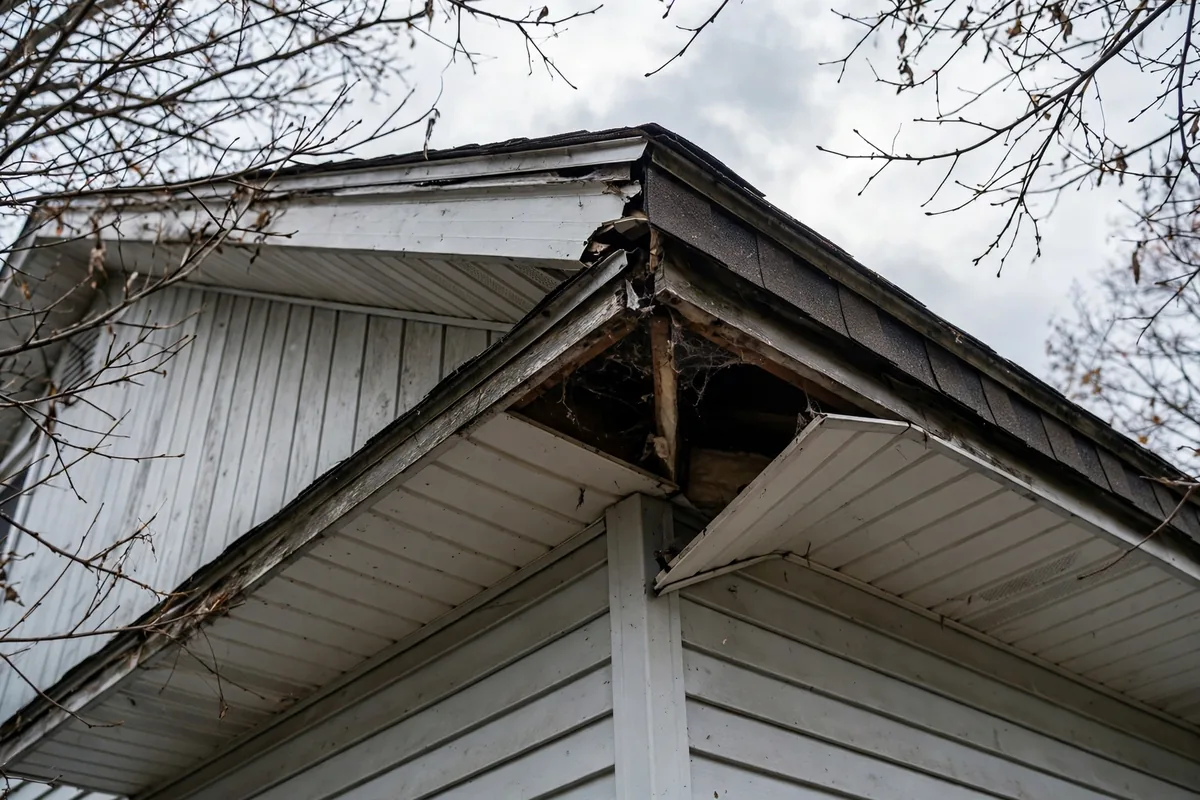
- Roof and soffit intersections, where a lower roof meets a wall. The single most common squirrel entry.
- Gable vents with damaged or missing screening.
- Ridge vent edges that have lifted.
- Fascia gaps where wood has rotted, often downstream of a gutter that has been overflowing.
- Chimney, uncapped or with a damaged cap. Raccoons in particular.
- Utility penetrations at the roofline for exhaust fans and plumbing vents.
Worth noting how often this traces back to water. A gutter that overflows for a season rots the fascia behind it, and that soft wood becomes an easy entry. Attic wildlife and deferred gutter maintenance are related problems more often than people expect.
The One Mistake to Avoid
Do not seal the hole until you are certain nothing is inside.
It feels like the obvious first move and it goes badly. A trapped squirrel or raccoon will chew through drywall, insulation, and wiring trying to get out, and if it does not get out you have a dead animal in a wall cavity in a heated house. That is a much worse problem than the noise was, and chewed wiring is a genuine fire concern.
The right order is confirm what it is, get it out or let it leave, then seal. In spring there is an added wrinkle, since sealing out an adult can leave dependent young behind, but in late fall that is less likely.
What You Can Check Safely
From the ground with binoculars, walk the perimeter and look at the roofline. Chewed or discolored spots at soffit corners, a lifted shingle edge, a gable vent screen hanging loose, staining around a vent. Squirrel entry holes are often obvious once you know to look, roughly fist-sized with chewed edges.
Inside, if you can see into the attic from a hatch without climbing around, look for droppings, disturbed or matted insulation, and daylight visible anywhere it should not be. Daylight is the fastest way to find a hole.
Do not go walking around in an attic you are unfamiliar with. Between the joists is drywall, not floor, and the insulation hides everything.
The Short Version
Note the time of day first, that alone usually tells you rodent versus squirrel versus raccoon. Listen for whether it is light and scratchy or heavy and deliberate. Find the hole before you seal anything, and never seal with something still inside. Call (732) 272-1929 if you want it identified before anybody climbs up there.