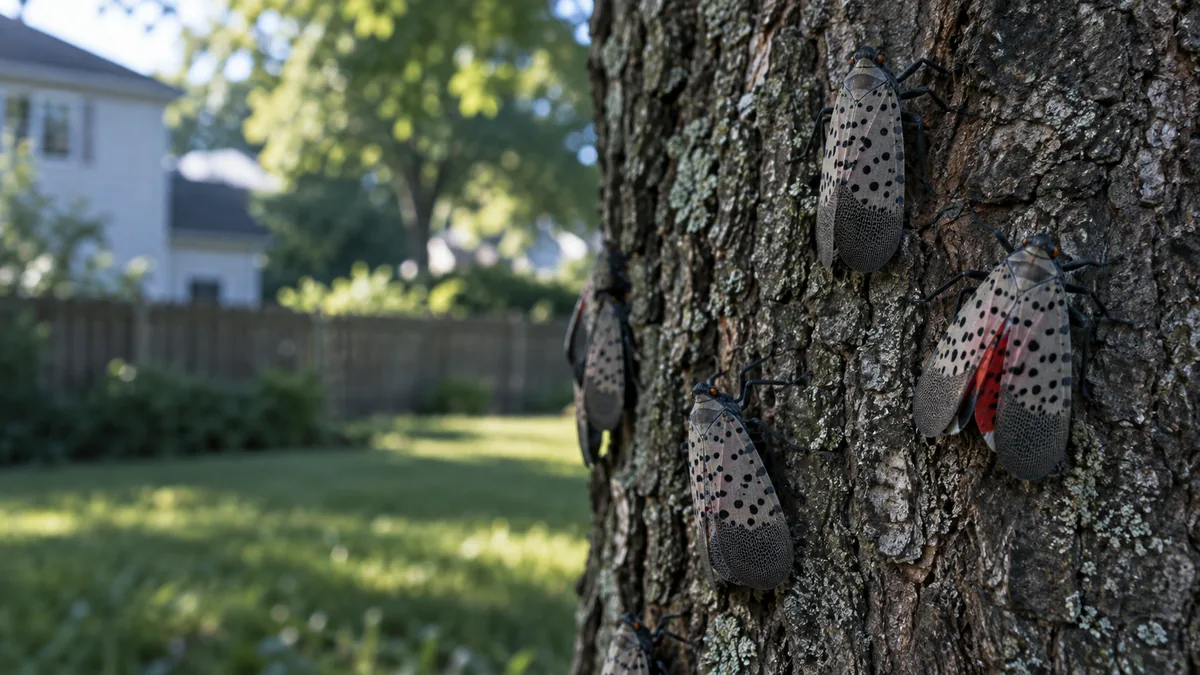
- Lanternflies don't bite, sting, or damage your house, the harm is to trees, vines, and the sticky honeydew mess they leave behind
- Adults swarm August through November; each one you see now will try to lay eggs before frost
- Egg mass scraping from September onward is the highest-value thing a homeowner can do, each mass destroyed is 30-50 fewer lanternflies next spring
- Tree-of-heaven on or near your property is the magnet; managing it changes your lanternfly pressure more than any amount of stomping
First, the Reassuring Part
Spotted lanternflies are an invasive planthopper from Asia, first found in the US in Pennsylvania in 2014 and now established across New Jersey. They look alarming and they show up in huge numbers, but they don't bite, they don't sting, they don't infest your home over winter the way stink bugs do, and they don't chew wood or fabric. For a homeowner, they're primarily a plant pest and a nuisance pest.
The "nuisance" part is real, though. Lanternflies feed on plant sap and excrete a sugary liquid called honeydew. In heavy numbers, honeydew coats decks, patio furniture, cars, and play equipment, then grows a black sooty mold on top. Underneath a heavily infested tree, everything gets sticky, moldy, and wasp-attracting, because yes, that sugar also pulls in yellow jackets.
What They Actually Damage
Lanternflies stress plants by draining sap in volume. In New Jersey yards the plants that take real damage are grapevines (they can kill them), young or newly planted trees, black walnut, willow, and maples under heavy sustained feeding. Mature, healthy shade trees generally tolerate feeding, they look terrible covered in lanternflies, but the tree survives. If you grow grapes or put in new landscaping recently, those plants are the ones worth protecting.
The Tree-of-Heaven Problem
Lanternflies have a strong preference for tree-of-heaven (Ailanthus altissima), itself an invasive that grows along fence lines, roadsides, and neglected property edges all over Monmouth County. It's their preferred host for feeding and egg-laying. If your property or your neighbor's has tree-of-heaven, you have a lanternfly magnet, and that single factor drives your local pressure more than anything else. Identifying and removing it (or having it treated) is the structural fix.
Where Your Effort Actually Matters: Egg Masses
From late September until the first hard frost, each female lays one or two egg masses, flat, gray-brown, putty-like patches about an inch long, each holding 30-50 eggs. They put them on tree trunks, but also on fences, outdoor furniture, firewood, grills, trailers, and stone. The eggs are how the population survives winter, and they're completely defenseless.
- Walk the property monthly from October through April, trunks, undersides of limbs, fence rails, anything that sat outside.
- Scrape masses into a bag or container with rubbing alcohol or hand sanitizer using a putty knife or an old card. Scraping onto the ground doesn't kill them.
- Check firewood, trailers, and anything you transport, that's how they spread to new areas.
Every mass you destroy is a few dozen lanternflies that never hatch. It's dramatically more effective than killing adults one at a time in August.
Is Stomping Pointless?
Not pointless, squish away, and swatting the adults on your patio keeps the immediate space livable. Just understand it's not a control strategy. Adults fly and hitchhike in from surrounding areas continuously, so the population you see reflects the neighborhood, not just your yard. The levers that change next year's numbers are egg masses and host trees.
The Short Version
Don't panic and don't exhaust yourself stomping. Protect grapevines and young trees, deal with tree-of-heaven, and put your real effort into egg-mass scraping from fall through spring. If the infestation is heavy or a valuable tree is taking sustained damage, call (732) 272-1929 and we'll assess what targeted treatment makes sense.