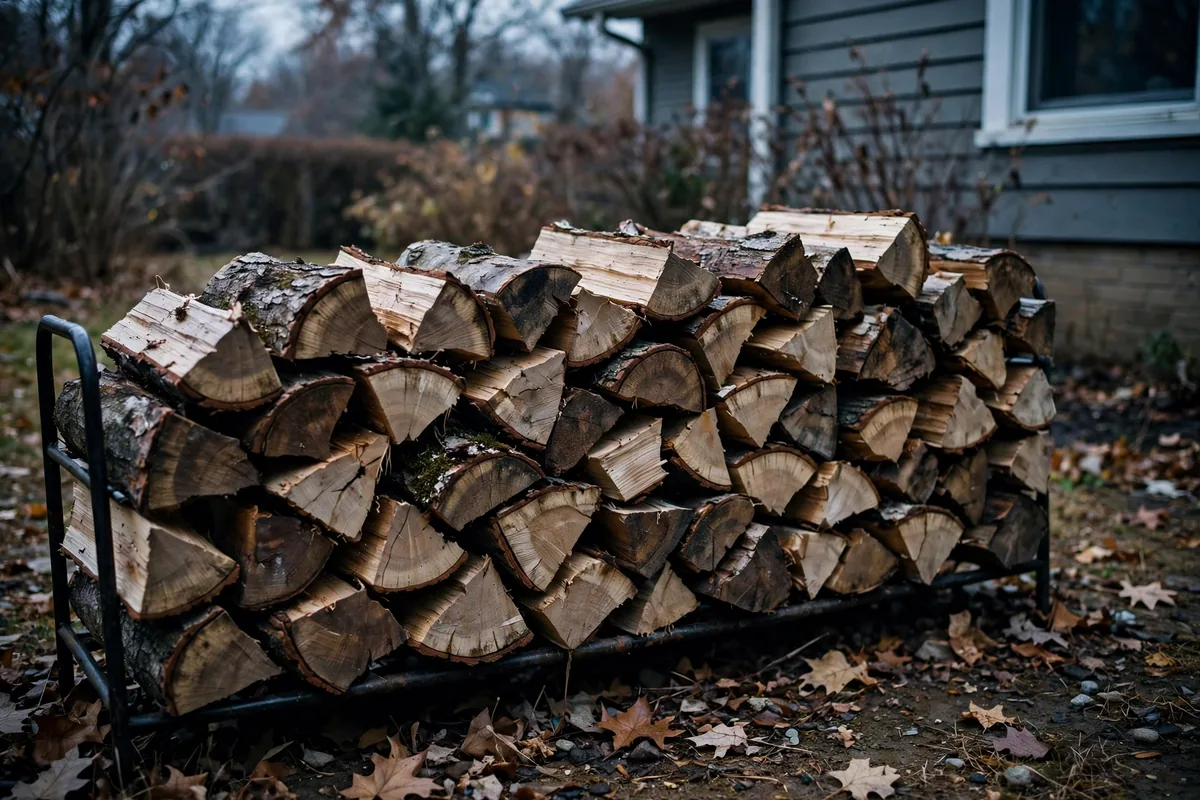
- Insects in firewood are mostly dormant until the wood warms up indoors, then they emerge days later
- Carpenter ants are the one worth paying attention to, since they can already be nesting in the log
- Never apply pesticide to firewood, it burns and you breathe the smoke
- Stack outdoors, off the ground, away from the house, and bring in only what you will burn that day
- Almost nothing that emerges from firewood will infest your house, it just needs to be vacuumed up
Why It Happens at All
Split wood sitting in a yard is prime habitat. It is dry, sheltered, full of cracks, and nobody disturbs it. Through the fall, insects move into it looking for a place to pass the winter, and the cold keeps them dormant and invisible.
Then you carry a few logs into a 68-degree living room. The wood warms through, the dormant insects read that as spring, and a few days later they are walking around your floor looking confused. The lag is why people rarely connect the two, since the wood came in Tuesday and the beetles show up Friday.
What Actually Rides In
- Carpenter ants. The one worth attention. They nest in damp, decaying wood, and a log from the bottom of an old pile can hold an active satellite colony. Large, black, and if you are seeing a steady trickle rather than one or two, that is a nest, not hitchhikers.
- Bark and wood-boring beetles. Common, and visually alarming because they can chew their way out of a log and leave sawdust. They cannot infest finished lumber in your house, since they need bark and high moisture content. They emerge, wander, and die.
- Spiders. Woodpiles are excellent spider habitat. This is also the single most likely place to encounter a northern black widow in New Jersey, since they favor undisturbed low spots exactly like the gaps in a stacked pile. Gloves when handling wood that has been sitting is a reasonable habit.
- Wasps and hornets. Overwintering queens tuck into bark crevices. One warm confused queen in the living room in January is startling but not a nest.
- Termites. Occasionally present in wood that has been sitting directly on soil. They will not move from the log into your framing on their own, but it is a reason not to stack wood against the foundation, which is a far more direct route.
Do Not Spray Firewood
This comes up every year and it is worth being blunt about. Do not apply any pesticide to firewood, not residual sprays, not dusts, nothing. You are going to set that wood on fire inside your house, and whatever you treated it with goes up with it and into the air you are breathing. No product labeled for structural pest control is approved for use on firewood, and that is why.
The same logic rules out the other shortcuts people try. Do not seal firewood in plastic hoping to suffocate what is inside, since that traps moisture and you get mold instead. Do not bake logs in the oven, which is a real fire risk and a smell you will regret.
The actual answer is boring: handling and storage.
How to Stack So It Does Not Matter
- Keep the pile away from the house. Twenty feet or more if your yard allows. Stacked against the siding, a woodpile is a bridge for carpenter ants, termites and mice straight to your wall.
- Get it off the ground. A rack, pallets, or cinder blocks. Direct soil contact is what invites termites and keeps the bottom layer damp enough for carpenter ants.
- Cover the top, leave the sides open. Rain off, air through. A fully wrapped pile holds moisture and becomes more attractive, not less.
- Bring in only what you will burn that day. This one rule solves most of the problem by itself. Wood that never sits warm indoors never gets the chance to wake anything up.
- Burn the oldest wood first. The longer a log sits, the more established whatever is living in it becomes.
- Knock logs together outside before carrying them in. Takes two seconds and dislodges a surprising amount.
When It Is Actually a Problem
Almost never, honestly. A handful of beetles over a winter is normal and self-limiting. Vacuum them up and move on.
What is worth a closer look is a pattern. Carpenter ants appearing steadily through winter, especially in a kitchen or bathroom rather than near the hearth, usually means there is a nest in the structure and the firewood was a red herring. Same with any insect that keeps showing up in a room nowhere near where you stack wood. That is a sign of something established indoors, and the woodpile is getting blamed for it.
The Short Version
Expect a few bugs, they are mostly harmless and they will not infest anything. Stack off the ground and away from the house, cover the top only, and carry in just what you will burn. Never put pesticide on wood you intend to burn. If you are seeing a steady trail of large black ants all winter, that is a different conversation, so call (732) 272-1929 and we will take a look.