- Most house spiders live indoors year round and never came in from outside
- The October spike is mating season, when males leave hiding and wander looking for females
- Outdoor orb weavers get large and conspicuous in fall because they have been growing all summer, not because they moved in
- New Jersey has only two spiders of real medical concern, and both are uncommon and reclusive
- Spiders are a symptom; a lot of spiders usually means a lot of other insects
They Were Already There
The common house spider is a different animal from the ones in your yard. It lives its entire life indoors, in basements, garages, crawl spaces, closets, and the back corners of rooms nobody uses. It did not come in from the cold in October because it was never out in the cold.
So what changed? Fall is mating season. Mature males stop sitting in a web waiting for food and start wandering, sometimes for days, looking for females. A wandering male crosses open floor, walls and ceilings in daylight, which is exactly how you end up seeing a spider you would never have noticed in July.
The population did not spike. Its visibility did.
The Big Ones Outside Are a Different Story
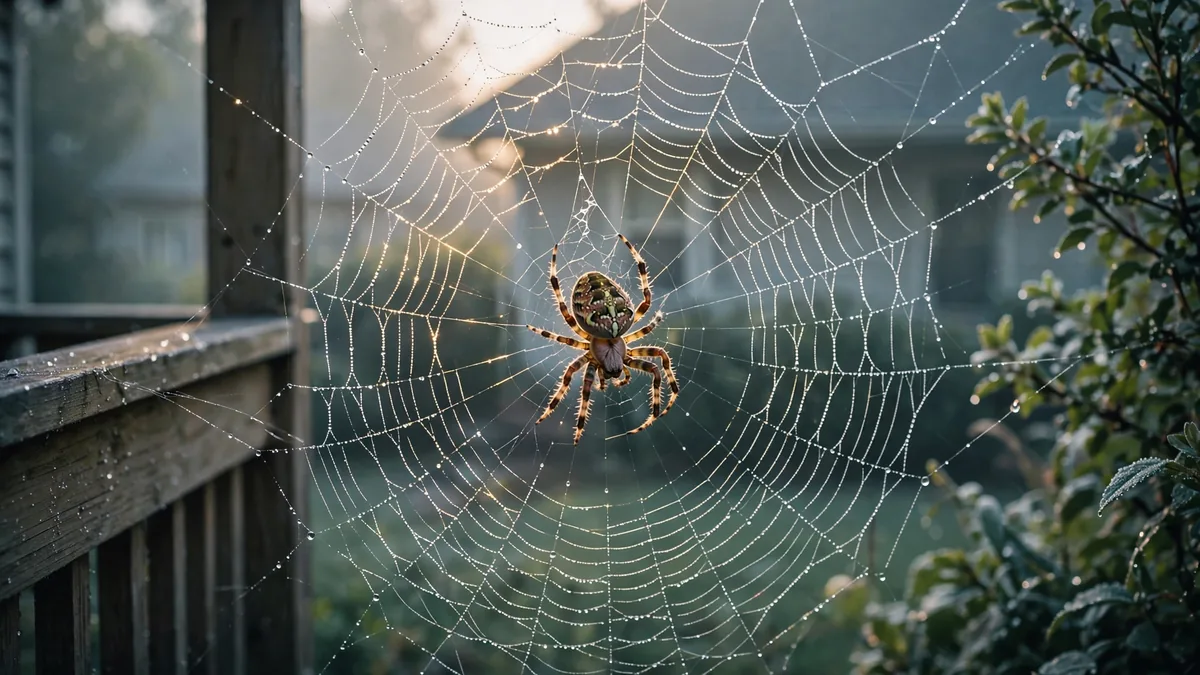
If the spider you are looking at is outdoors in a large circular web across your porch or between two shrubs, that is probably an orb weaver, most likely a garden spider or a barn spider. Those genuinely do look dramatic in the fall, and there is a simple reason: they hatched in spring, they have been eating all summer, and by October they are at full adult size with egg-laden abdomens.
They are not getting more numerous. They are just finally big enough to notice, and their webs have gotten correspondingly large.
Worth knowing: orb weavers are harmless, they rarely come indoors, and most of them will die off with the first hard frosts anyway. A big web across a walkway is annoying, but the spider in it is eating mosquitoes and flies for free.
What Actually Matters in New Jersey
Two species are worth being able to recognize, and both are far less common than the internet suggests.
- The northern black widow. Present in New Jersey but genuinely uncommon. Glossy black, roughly half an inch in body, with red markings on the underside of the abdomen. It builds a messy, irregular web close to the ground in undisturbed spots: woodpiles, under decks, in crawl spaces, inside rarely moved outdoor containers. It is extremely reclusive and bites defensively, almost always when pressed against skin.
- The brown recluse. Not established in New Jersey. Occasionally one arrives in a shipment or a moving box, but the population does not live here. The overwhelming majority of "brown recluse" bites diagnosed in this state turn out to be something else entirely, often a bacterial skin infection. If a wound is spreading or necrotic, that needs a doctor regardless of what caused it, and the cause is almost certainly not a recluse.
Everything else you are likely to find in a Monmouth County house, cellar spiders with their long thin legs, wolf spiders that run across the floor, jumping spiders on the windowsill, is harmless and worth leaving alone or relocating outside with a cup.
Spiders Are Telling You Something
This is the part most people miss. Spiders are predators. They stay where there is food, and their food is other insects. A basement with a lot of spiders is a basement with a lot of flying and crawling insects, which usually means moisture, clutter, or exterior lighting that pulls bugs to the house at night.
If you kill the spiders and change nothing else, you have removed a predator from a room that still has a food supply. More move in. Address what they are eating and the spider population drops on its own.
What Actually Reduces Them
- Cut the food supply. Fix moisture problems in basements and crawl spaces, since damp spaces breed the insects spiders eat.
- Change your exterior lighting. White porch lights pull in insects all night and spiders set up where the food is. Warm or yellow bulbs attract far fewer.
- Reduce harborage. Cardboard boxes, stacked storage, and undisturbed clutter in basements and garages are ideal spider habitat. Plastic bins are not.
- Knock down webs regularly. Simple and underrated. A spider that has to keep rebuilding usually relocates.
- Seal the same gaps you would for mice. Door sweeps, window screens, utility penetrations. The wandering males find their way in through the same openings everything else uses.
- Vacuum rather than spray indoors. It removes the spider, the web and the egg sacs in one pass.
The Short Version
The October spider surge is mating season making males visible, not an invasion from outside. The giant webs on your porch are orb weavers that simply finished growing. Only the northern black widow is worth real caution here, and it is uncommon and hides. If you are seeing a lot of spiders, treat it as information about what else is living in that space. Call (732) 272-1929 if you want it looked at.