- Blacklegged ticks have two active peaks in NJ: nymphs in late spring, adults in mid-to-late fall
- Adult ticks carry Lyme at roughly double the rate of nymphs, though they're easier to spot and remove
- Ticks stay active any day above about 40 degrees, which in NJ means well into November and beyond
- Fall yard work puts you directly into prime tick habitat: leaf litter, wood piles, and the wood line
- A fall tick treatment covers the surge most homeowners skip entirely
Two Seasons, Two Different Ticks
The blacklegged tick, the one people call the deer tick, lives about two years and moves through three feeding stages. Each stage peaks at a different time, which is why New Jersey effectively gets two tick seasons instead of one.
- Late spring and early summer: nymphs. Poppy-seed sized, roughly the size of the period at the end of this sentence. They're responsible for the majority of Lyme transmission to people, not because they're more infected, but because almost nobody sees them before they've been attached long enough to matter.
- Mid-to-late fall: adults. Sesame-seed sized with a visible reddish-brown body, so genuinely easier to spot. But a considerably higher share of them are infected, since they've had an extra full year and an extra blood meal to pick up the bacteria.
In endemic parts of the Northeast, infection rates in nymphs commonly run in the twenties as a percentage, while adult females often run near half. Those numbers vary year to year and town to town, but the direction is consistent: the fall tick on your ankle is more likely to be carrying something than the summer one was.
They Don't Quit at the First Cold Snap
The single most common misconception we hear is that a cold night ends tick season. It doesn't. Adult blacklegged ticks are active on any day the temperature climbs above roughly 40 degrees and the ground isn't frozen or snow-covered. In Monmouth County that describes a large share of October, November, and a scattering of days straight through winter. A mild December afternoon is a perfectly good tick day.
Coastal towns hold that window open even longer. Ocean moderation keeps Long Branch, Monmouth Beach, Sea Bright, and Oceanport warmer later into the fall than inland Freehold or Colts Neck.
Fall Activities Put You in Tick Habitat
The overlap here is unfortunate. The fall adult surge lines up almost perfectly with the chores that push people into exactly the places ticks wait:
- Raking and moving leaves. Leaf litter is prime tick habitat. It holds the humidity they need to avoid drying out. Piling it up concentrates them.
- Stacking firewood. Wood piles along a tree line are a reliable tick zone, and handling wood means brushing against it repeatedly.
- Cleaning out the wood line and garden beds. The transition zone between lawn and woods is where tick density is highest on nearly every property we treat.
- Hunting and hiking. Obvious, but worth stating because fall is when both pick up.
Deer movement increases in the fall rut as well, which redistributes adult ticks across properties that were quieter all summer.
What Actually Works in the Fall
Three things, in order of how much they matter:
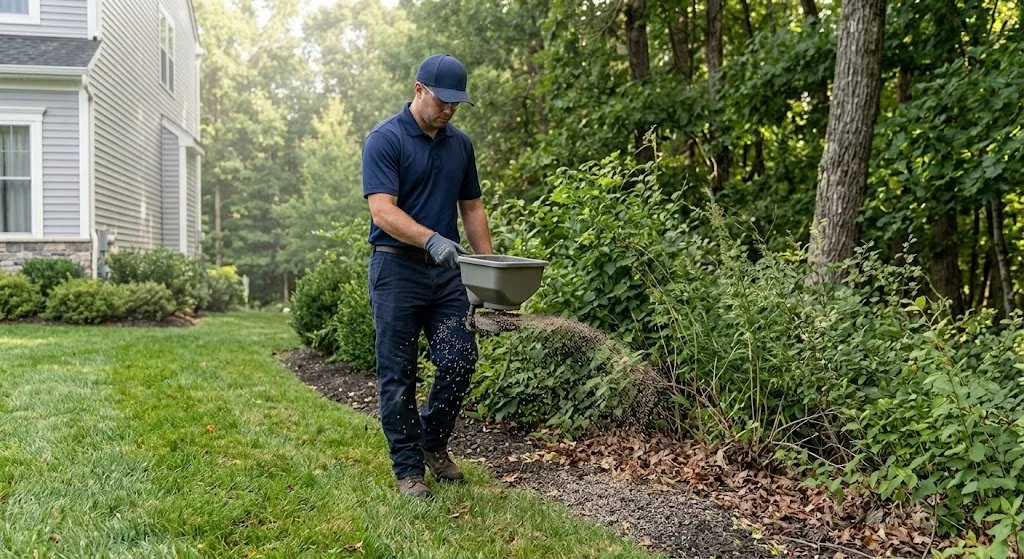
- Treat the perimeter and the wood line. A granular application along the yard-to-woods transition targets where ticks actually are instead of broadcasting over open lawn where they mostly aren't. We recommend three tick treatments per season, applied about every two months, and the fall one is the one people most often skip.
- Manage the leaf litter. Don't let leaves sit packed against the house, along fences, or in the beds through winter. Less litter means less humidity means fewer surviving ticks.
- Check, every single time. After yard work, before the shower. Behind knees, waistband, hairline, armpits, and the same on kids and pets. A tick found and removed early is a non-event. Talk to your vet about year-round coverage for dogs, since fall is exactly when seasonal-only products lapse.
The Short Version
Tick season in New Jersey doesn't end in August, it restarts. Adults come out in October, they carry Lyme at higher rates than the summer nymphs did, and they stay active on any mild day for months. If your last tick treatment was in July and you've got a wood line, leaves, and a dog, you have a gap worth closing. Call (732) 272-1929 and we'll take a look at your property.