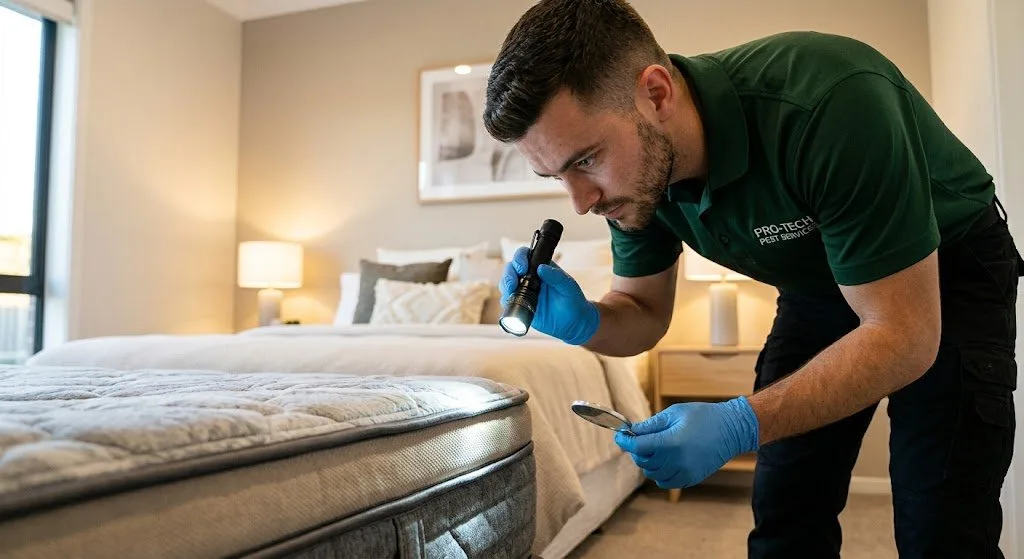
- Bed bugs have nothing to do with cleanliness, they spread by hitchhiking on luggage, furniture, and clothing
- Travel, used furniture, and shared walls in multi-family housing are the top routes into NJ homes
- Look for rust-colored stains, shed skins, and bites in lines or clusters
- Early detection dramatically shrinks treatment cost and time, call at the first sign, not after months
The Dirty Secret About Bed Bugs: Dirt Has Nothing to Do With It
Bed bugs don't infest dirty homes. They infest occupied homes. A penthouse and a studio apartment are equally attractive to a bed bug, all they need is a warm-blooded host to feed on at night and a crack to hide in during the day. The stigma around bed bugs keeps people from reporting infestations early, which is exactly how small problems become big ones.
How They Actually Get Into Your Home
Travel. Hotels, motels, Airbnbs, hostels, any place with a rotating cast of guests is a potential source. Bed bugs crawl into luggage, clothing, and personal items while you sleep. You carry them home without knowing. This is the #1 introduction pathway.
Used furniture. That couch from Facebook Marketplace. The vintage dresser from the estate sale. The mattress set your friend was getting rid of. Used upholstered furniture is a high-risk item for bed bug transfer. Check seams, tufts, and joints before bringing used furniture inside.
Visitors. A guest who has an undetected infestation at their home can introduce bed bugs to yours through their overnight bag, coat, or even on their person. This isn't about hygiene, it's about proximity.
Adjacent units. In multi-family buildings, bed bugs travel through wall voids, electrical conduits, and plumbing chases between units. One infested apartment can seed the entire floor.
Public spaces. Movie theaters, public transit, waiting rooms, offices, any upholstered seating can harbor bed bugs. Low risk individually, but possible.
What to Look For
Bed bugs are visible to the naked eye, adults are about the size of an apple seed, reddish-brown, flat (unfed) or swollen and darker (recently fed). But they're nocturnal and excellent hiders. During the day they squeeze into mattress seams, box spring joints, headboard crevices, nightstand drawers, and baseboards within 5-8 feet of where you sleep.
The easier-to-spot signs:
- Small dark spots on sheets or mattress seams, bed bug fecal stains (digested blood). They look like someone touched a fine-tip Sharpie to the fabric.
- Rusty or reddish smears on sheets, crushed bugs you rolled onto during sleep.
- Tiny white eggs or shed skins, eggs are about 1mm, pearl-white. Cast skins are translucent.
- Bites in lines or clusters, bed bugs often bite in a row of 3-4 (sometimes called "breakfast, lunch, and dinner"). Not everyone reacts to bites, so absence of bites doesn't mean absence of bed bugs.
- A sweet, musty odor, noticeable in moderate to heavy infestations. Described as over-ripe raspberries or wet towels.
Why Early Detection Matters
A single pregnant female bed bug can produce 200-500 eggs in her lifetime. In a warm home, eggs hatch in 6-10 days and nymphs reach adulthood in about 5 weeks. A small hitchhiker population can become a full infestation within 2-3 months. The difference between treating a bed or two and treating an entire house is the difference between $500 and $3,000+.
What Treatment Looks Like
Effective bed bug eradication requires systematic treatment, there's no one-spray solution. Our approach includes thorough inspection to determine the extent of infestation, targeted treatment of all harborage areas, and follow-up treatments to catch newly hatched nymphs that survived the initial treatment. We use a combination of methods tailored to your specific situation.
DIY bed bug treatment almost never works. Over-the-counter sprays and bug bombs don't reach the crevices where bed bugs hide, and they can actually scatter the population deeper into walls and furniture, making professional treatment harder.
Think You Might Have Them?
Don't panic, don't throw out your mattress, and don't buy bug bombs. Call (732) 272-1929 for a free inspection. Anthony will check the evidence, confirm whether it's bed bugs, and explain exactly what needs to happen. The sooner you call, the simpler and cheaper the treatment.