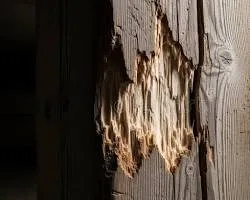
- Termites eat wood; carpenter ants excavate it for nesting, both damage structure, differently
- Check waists and wings: termites have straight waists and equal wings, ants have pinched waists and unequal wings
- Termite damage is the more urgent problem, mud tubes on the foundation are the giveaway
- Sawdust-like frass points to carpenter ants; hollow-sounding wood can be either, so get it identified
They Both Eat Your House. That's Where the Similarities End.
Every spring in Monmouth County, homeowners find winged insects near windows, baseboards, or foundation walls and ask the same question: termites or carpenter ants? The answer determines everything, the treatment, the urgency, the cost, and whether you're calling a pest guy or a structural engineer.
Both species are wood-destroying insects. Both swarm in spring (typically April through June in NJ). Both can cause serious structural damage if left unchecked. But carpenter ants and termites attack wood differently, leave different evidence, and require completely different treatment approaches.
Visual Identification
Carpenter ants are large, workers are typically 1/4 to 1/2 inch, queens can be 3/4 inch. They're black or dark reddish-brown, with a clearly defined narrow waist between the thorax and abdomen. Their antennae are elbowed (bent). Winged swarmers (reproductive ants) have two pairs of wings, the front pair is noticeably larger than the back pair.
Termites (specifically eastern subterranean termites, the primary species in NJ) are much smaller, workers are about 1/4 inch, pale white, and soft-bodied. You'll rarely see workers unless you break open infested wood. Swarmers are dark brown or black with straight antennae (not elbowed) and two pairs of wings that are equal in size. After swarming, termites shed their wings, finding piles of small equal-sized wings on windowsills is a classic termite sign.
The quick test: if it has a clear waist and elbowed antennae, it's a carpenter ant. If it has a thick waist, straight antennae, and equal wings, it's a termite.
How They Damage Wood
Carpenter ants don't eat wood. They excavate it to create galleries for nesting. The wood gets removed and dumped outside the nest as frass, small piles of sawdust-like debris mixed with insect body parts. If you find small piles of fine wood shavings near baseboards, window frames, or foundation walls, that's carpenter ant frass. The galleries are smooth and clean inside, almost sandpapered.
Termites eat wood. They consume the cellulose in wood as their food source. Damaged wood is hollowed out with mud packed into the galleries. There's no frass, the wood just disappears from the inside. Tap on a baseboard or stud you suspect is infested: if it sounds hollow, termites may have eaten the interior while leaving the painted surface intact. Termite-damaged wood often has a layered, mud-lined appearance when broken open.
Where to Find Evidence
Carpenter ants: Look for frass piles, especially near moisture sources. Carpenter ants prefer wood that's already damp or decaying, around leaky windows, under bathroom floors, near roof leaks, in crawl spaces with moisture problems. They're most active at night and you'll often hear faint rustling inside walls during quiet evening hours.
Termites: Look for mud tubes, pencil-width tunnels made of soil and wood particles that run along foundation walls, piers, or pipes. Subterranean termites live in the soil and build these tubes to travel between their colony and the wood they're feeding on. Mud tubes on your foundation or in your crawl space are definitive evidence of termite activity. Also check for soft spots in wood, bubbling paint, or doors/windows that suddenly stick, all signs of hidden termite damage.
Which Is More Urgent?
Termites are the bigger threat. A carpenter ant colony might have 3,000-5,000 workers excavating a relatively small area. A mature subterranean termite colony can have 60,000 to over a million workers eating wood 24/7/365. Termite damage accumulates faster and can compromise structural members before you know they're there.
That said, carpenter ants shouldn't be ignored. A satellite colony in your wall framing is still destroying wood, and where there's one colony there are often others. The moisture problem that attracted them in the first place will attract more unless you fix it.
Treatment Differences
Carpenter ants: Find and treat the colony directly (dusting the nest void with insecticidal dust), apply perimeter treatment around the foundation, and fix the moisture source that attracted them. Without fixing the moisture, they'll come back.
Termites: Liquid barrier treatment in the soil around the foundation (creating a chemical barrier between the colony and the structure), baiting systems that the colony feeds on and carries back to eliminate itself, or a combination of both. Termite treatment is more involved and typically more expensive than carpenter ant treatment.
What to Do Right Now
If you're finding winged insects, sawdust piles, mud tubes, or hollow-sounding wood, don't wait. Both carpenter ants and termites cause progressive damage that gets more expensive the longer you ignore it. Call Anthony at (732) 272-1929 for a free inspection. We'll identify exactly what you're dealing with and tell you what needs to happen.