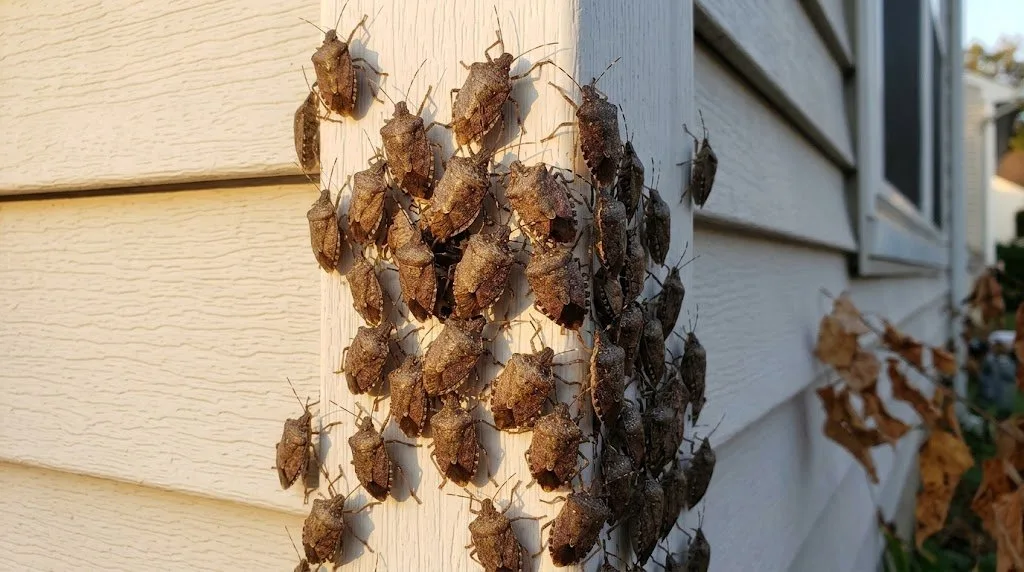
- Stink bugs invade in fall looking for overwintering shelter, not food, killing them inside doesn't solve it
- Exclusion (sealing entry points) plus a fall perimeter treatment is what actually works
- Timing matters: treat in September or early October, before they're inside the walls
- Once they're overwintering in wall voids, options shrink until spring
They're Not Trying to Move In. They're Trying to Survive.
Brown marmorated stink bugs (BMSBs) are an invasive species from East Asia that established themselves in the mid-Atlantic around 2001. New Jersey is ground zero for their population in the US. Every fall, as temperatures drop below 50°F consistently, usually mid-September through October in Monmouth County, adult stink bugs seek warm sheltered spots to overwinter. Your house is the biggest warm sheltered spot in the neighborhood.
They don't breed inside your home. They don't eat your food or your wood. They don't bite. What they do is congregate by the hundreds on south- and west-facing walls warmed by afternoon sun, squeeze through gaps you didn't know existed, and settle into wall voids, attics, and behind baseboards to wait out winter. Then in spring, they wake up and try to get back outside, which is when you find them crawling on ceilings and windows in March and April.
Why Killing Them Inside Is a Losing Strategy
The smell. That's the whole problem with stink bugs. When threatened, crushed, or vacuumed roughly, they release a chemical compound (trans-2-decenal) that smells like a combination of cilantro and burnt rubber. Crush one and the smell lingers for hours. Worse, dead stink bugs inside wall voids attract carpet beetles and other scavengers, creating a secondary pest problem.
Vacuuming works if you use a shop vac with a bag you can seal and discard. Don't use your household vacuum, the smell will come through the exhaust and persist in the filter for weeks.
What Actually Works: Exclusion + Perimeter Treatment
Exclusion is the primary defense. Stink bugs enter through gaps under doors, around window frames, through weep holes in brick, around pipe and wire penetrations, at soffit-to-wall junctions, and through damaged screens. Sealing these entry points before fall, August/September, is the single most effective thing you can do.
Key spots to seal: replace damaged window screens, install door sweeps, caulk around exterior window and door trim, seal pipe and wire penetrations with steel wool and caulk, check attic vents for gaps, and inspect soffit junctions.
Perimeter treatment is the second line. A residual insecticide applied to the exterior walls, especially south- and west-facing surfaces, in late August or early September creates a contact barrier that kills stink bugs before they find their way inside. This is the same type of barrier treatment we use for other pests, timed specifically for the fall stink bug migration.
Timing Is Everything
Once stink bugs are inside your walls, there's not much you can do until spring. The window for effective prevention is August through mid-September, before they start seeking shelter. If you call us in November saying "stink bugs are everywhere inside," we can treat, but the ones already in the wall voids are largely inaccessible until they emerge in spring.
The best approach: schedule a perimeter treatment in late August alongside your regular pest control service. One additional application timed to the stink bug migration makes a significant difference.
The NJ Stink Bug Calendar
- June to August: Adults feeding on crops and vegetation. Not seeking shelter yet.
- September to October: Migration season. Adults congregate on sun-warmed walls and enter structures. This is when prevention matters most.
- November to February: Overwintering. Dormant inside wall voids. Virtually untreatable.
- March to April: Emerging from dormancy. You'll see them inside, heading toward light. They're trying to get back outside.
- April to May: Mating season. The cycle restarts.
Don't Wait Until You See Them
Call (732) 272-1929 in August or early September to schedule your fall perimeter treatment. Anthony will walk the exterior, identify entry points, and treat the surfaces stink bugs target. Prevention beats eviction every time.