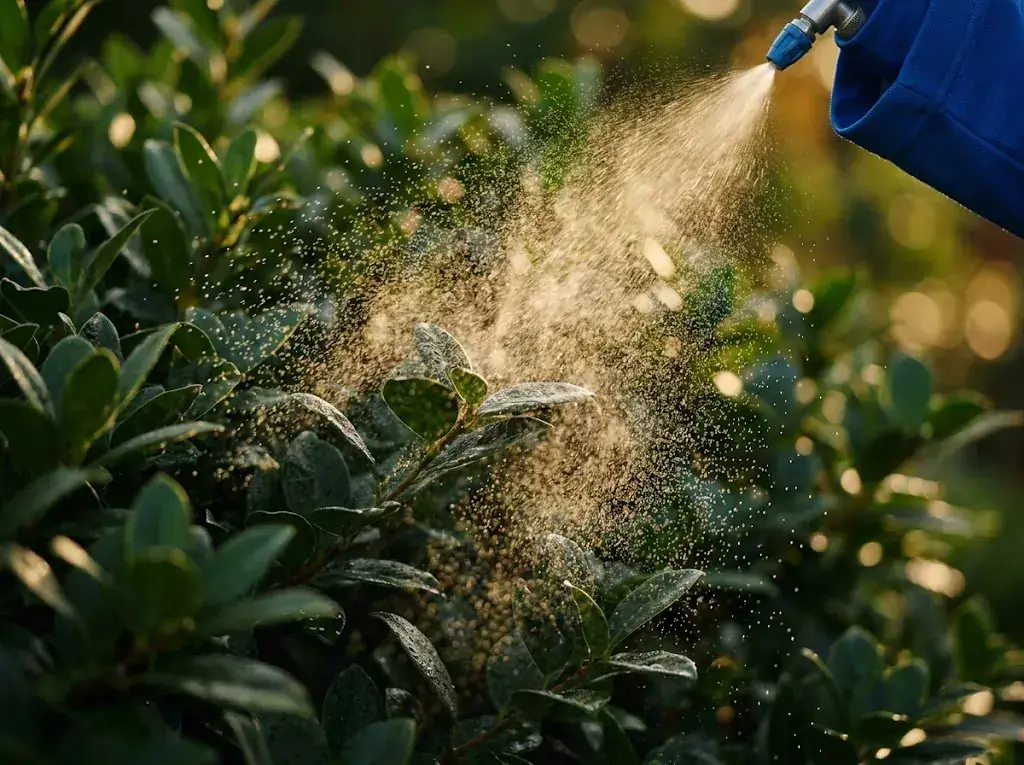
- In Monmouth County, the right start window is April, before populations establish
- Waiting until you're getting bitten means fighting an established breeding population all summer
- The first treatment knocks down early adults and treats resting and breeding zones ahead of peak season
- Season plans run April through September, spaced every 3-4 weeks
The Mosquito Lifecycle Drives Everything
To understand why late April matters, you have to understand what mosquitoes are actually doing right now. The mosquitoes you'll deal with in July aren't flying around your yard yet, they're sitting as eggs and early-stage larvae in standing water from snowmelt, spring rain, and the first warm days.
A single female mosquito lays 100-300 eggs at a time. Those eggs hatch in 2-7 days when temperatures are right. The resulting larvae mature into biting adults in another 7-14 days. Then those adults breed and lay eggs again. By late June, what started as a few overwintering females has become an exponential population explosion.
The treatment we do in late April or early May targets the early generations, the breeding stock that produces every mosquito you'll see for the next four months. Knock that down now, and the population doesn't have a foundation to build from.
Why Waiting Costs More
The "wait until I see them" approach has a few problems we see every year:
- You're treating an established population, not a starting one. By the time you see adult mosquitoes consistently, three or four breeding cycles have already happened on your property.
- Treatments work harder against existing biters. Each treatment after the first is essentially playing catch-up to what was already produced.
- You spend more total over the season. Properties that start late typically need more frequent treatments and stronger applications to get the same result.
- You lose part of summer. Even if you start in June, the first 3-4 weeks of treatment are bringing the existing population down rather than keeping it suppressed. That's weeks of evening barbecues and pool time fighting a battle that didn't have to happen.
The math most homeowners miss
One untreated property that produces a few thousand adult mosquitoes in May is producing tens of thousands by July. The female mosquito doubling rate during summer in NJ is roughly every 10-14 days. Late starters aren't just behind, they're behind on a curve that's getting steeper every week.
The Right Window in Monmouth County
For most properties in our service area, Manalapan, Marlboro, Holmdel, Colts Neck, Freehold and surrounding towns, the optimal first treatment window is mid-April through mid-May. Specifically, the right time is determined by:
- Sustained overnight temperatures above 50°F, mosquito eggs become active above this threshold
- 2+ weeks past the last frost, ensures larvae are surviving in standing water
- Beginning of regular spring rain cycles, creates the standing water that becomes breeding sites
By the time you're hosting a Memorial Day cookout, the season is fully underway. Properties that had their first treatment in April are coasting through May with low pressure. Properties starting Memorial Day weekend are starting a fight.
What the First Treatment Actually Does
A spring barrier treatment applied at the right time accomplishes several things at once:
- Kills overwintering adult females hiding in shaded vegetation, mulch beds, and under decks before they can lay their first batch of eggs
- Treats the resting surfaces mosquitoes use during the day, undersides of leaves, fence posts, foundation walls, so the next wave is killed when they land
- Provides residual control for 21-30 days with quality products, meaning new adults that emerge from local breeding sites get killed off as they enter your property
- Targets ticks at the same time when we use combined formulations, and tick activity in NJ has already started by late April
How Property Conditions Affect Timing
Not every property has the same risk profile. The factors that move "right time to treat" earlier or later:
Properties with high water/shade, treat early
If your yard has any of these features, you're at higher risk and benefit from earlier treatment:
- Wooded edges or heavy tree canopy
- Drainage issues, low spots that hold water
- Pond, stream, or wetland nearby
- Heavy mulch beds (mosquitoes rest in mulch during the day)
- Adjacent to undeveloped land or vacant lots
Open, dry properties, flexible timing
If your yard is mostly sun, well-drained, and not adjacent to wooded areas, the timing window is more flexible. Late April still beats late May, but the urgency is lower.
Why DIY Spring Treatments Don't Work
Big-box store hose-end sprayers feel like they should solve this. They don't. The reasons:
- Penetration depth. Consumer products don't reach the undersides of leaves and the cracks where mosquitoes actually rest. Professional equipment uses fine-droplet mist that drifts into those spaces.
- Active ingredients. Consumer products use lower-concentration pyrethroids that break down in 3-7 days. Our treatment uses commercial-grade formulations that maintain activity for 21-30 days.
- Coverage. A typical residential property has 8,000-15,000 sq ft of treatable surface area. Hose-end sprayers cover effectively only the front 2,000 sq ft of that.
- Timing knowledge. Even if the product worked, knowing when in the lifecycle to hit hardest takes experience. Most homeowners spray when they see mosquitoes, which is too late.
How We Approach the First Treatment
Our process is straightforward. We come out, walk your property, identify the breeding sites and resting areas specific to your yard, and lay out a treatment schedule that fits the actual conditions, not a packaged "monthly service" that's the same for every customer.
For most Monmouth County properties, this means:
- One late-April / early-May barrier treatment to start
- Follow-up treatments every 3-4 weeks through October
- Larvicide on standing water sources we identify (drainage areas, French drain outlets, etc.)
- Same-day rescheduling if rain is expected within 24 hours of application
Owner Anthony Howard answers every call personally, including the first one. Free estimates anywhere in Monmouth County. Call (732) 272-1929.
The Short Version
Mosquito treatment in late April beats mosquito treatment in late May. Mosquito treatment in late May beats mosquito treatment in late June. Every week you wait, the mosquito math gets worse and you spend more total to get the same result.
If you've been thinking about treatment this year, or if last summer was the year you decided "next year I'm doing something", that next year is now. The window is open. Call before it closes.