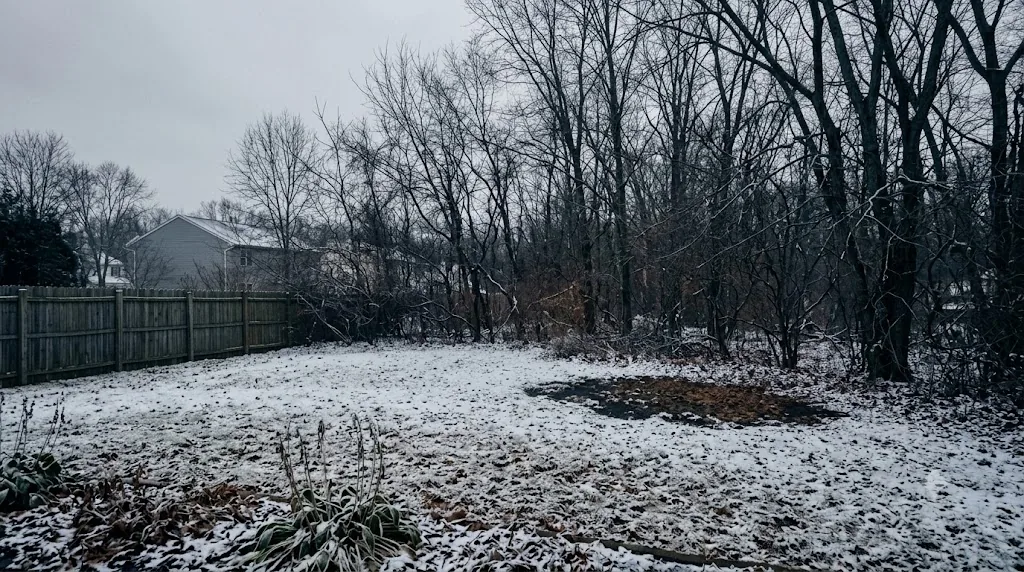
- Some mosquito species overwinter as fertilized adult females hiding in sheds, crawl spaces, hollow logs and leaf litter
- Others overwinter as eggs that are freeze-tolerant and simply wait for spring water
- Ticks do not hibernate at all, they shelter under leaf litter and snow and resume activity any day above about 40 degrees
- Snow cover insulates ticks rather than killing them, so a hard winter does not mean a light tick year
- Fall yard cleanup is the cheapest thing you can do for next spring
Mosquitoes Take Two Different Routes
There is no single answer here because different species solved the problem differently, and both strategies are at work in a typical Monmouth County yard.
Some overwinter as adults. Fertilized females of species like the northern house mosquito, the one that matters most for West Nile, find a protected spot in the fall and enter a dormant state called diapause. They are not dead, they are idling. Where they go:
- Sheds, detached garages, and crawl spaces
- Basements and utility rooms, especially damp ones
- Hollow logs, tree cavities, animal burrows
- Deep leaf litter and woodpiles
When the weather warms, those same females come out already mated and immediately look for a blood meal so they can lay. That is why the first mosquitoes of spring seem to show up out of nowhere.
Others overwinter as eggs. The Asian tiger mosquito, the aggressive daytime biter, lays eggs just above the waterline in containers. Those eggs are built to survive freezing and drying. They sit in the tire, the planter saucer, the clogged gutter, the folded tarp, all winter. The first good spring rain floods them and they hatch. One forgotten container can carry hundreds of eggs straight through to April.
Ticks Do Not Hibernate
This is the part that surprises people most. Blacklegged ticks have no winter shutdown. They shelter, they wait, and they come back out whenever conditions allow.
Their winter plan is simple: get under the leaf litter. A few inches of damp leaves buffers temperature swings and keeps humidity high enough that they do not dry out. On any day the air gets above roughly 40 degrees and the ground is not frozen solid, adult ticks will climb back up and quest for a host. In New Jersey that happens repeatedly through December, January and February.
Snow makes it better for them, not worse. A snow layer acts as insulation, holding the ground underneath at a stable temperature well above the air. The winters people assume will knock the tick population back are often the ones that protect it best.
What actually hurts ticks is a cold snap with no snow cover, or a dry, exposed winter. Those conditions kill by desiccation more than by temperature.
Why Any of This Matters to You
Because next year's starting population is decided now, not in April. Two properties on the same street can go into winter looking identical and come out of it very differently depending on what was left sitting around.
- A yard with clean gutters, no standing containers, and leaves cleared off the beds and the wood line gives both groups far fewer places to make it through.
- A yard with a packed gutter, a tarp holding water, and six inches of leaves against the foundation is effectively running a shelter.
This is also why we push the last treatments of the season rather than quietly letting them lapse in September. Reducing the number of females that reach a sheltered spot in the fall means a smaller population coming out in spring.
Your Fall Checklist
Short, and all of it pays off six months from now:
- Clear the gutters once the leaves are down. This is both a mosquito egg site and a water source.
- Empty and flip everything that holds water. Buckets, saucers, toys, wheelbarrows, boat and grill covers. Tip them so they cannot refill.
- Do not let leaves sit packed against the foundation, in the beds, or along the wood line. That is the single best tick habitat on the property.
- Move the woodpile off the ground and away from the house if you can.
- Seal up the shed and crawl space where it is easy. Fewer sheltered cavities means fewer overwintering adults.
The Short Version
Nothing dies off, it just hides. Mosquitoes wait as dormant females in sheltered spots or as freeze-proof eggs in your containers. Ticks sit under the leaf litter and come back out on every mild day all winter. The work you do in October decides how heavy April is. Questions about your property? Call (732) 272-1929 and Anthony will walk it with you.