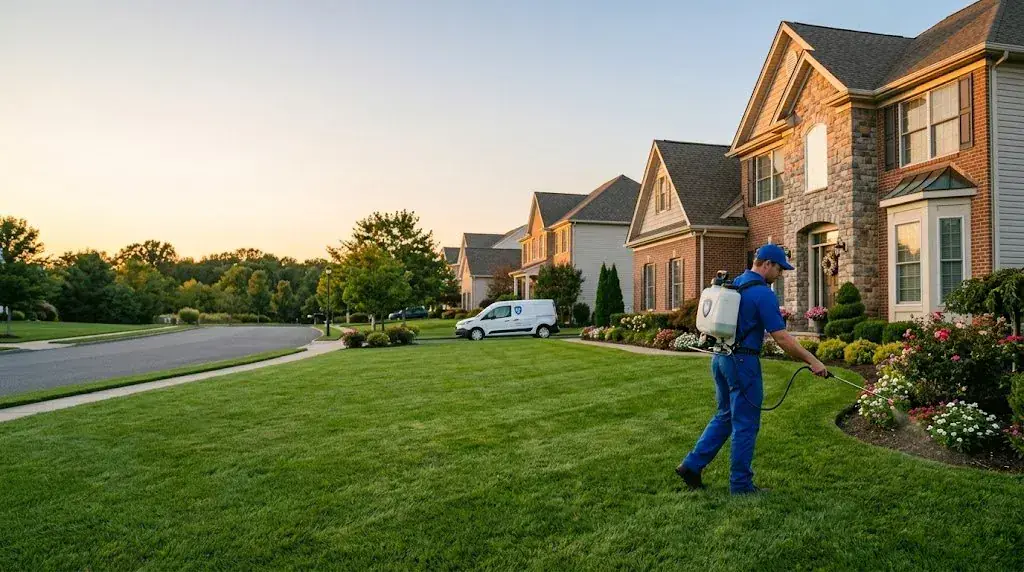
- Any water standing five or more days can breed mosquitoes, the audit starts there
- Check gutters, plant saucers, toys, tarps, and low spots; a bottle cap of water is enough
- Trim vegetation and clear leaf litter, shaded, humid foliage is mosquito resting habitat
- Run the checklist before your first treatment and the barrier works dramatically better
The Five-Day Rule
Mosquitoes need standing water to breed. Specifically, they need water that sits undisturbed for at least five days. Female mosquitoes lay eggs on or near still water, eggs hatch into larvae, larvae mature into pupae, pupae emerge as biting adults, all within a 5-7 day cycle in summer NJ temperatures.
This means: any standing water on your property that lasts more than 5 days is producing mosquitoes. Eliminate the standing water and you eliminate breeding capacity. Eliminate breeding capacity and you eliminate the local mosquito production line.
The treatment we apply kills adult mosquitoes that land on treated surfaces. It can't kill mosquitoes that haven't hatched yet. The audit below identifies and addresses the breeding sites the treatment can't reach.
The Standing Water Audit
Obvious sources (almost always present)
- Buckets and containers in the yard, garage, or shed that fill with rain
- Wheelbarrows, kids' toys, sandbox covers tipped at angles that hold water
- Plant saucers under outdoor potted plants
- Pet water bowls left outside between uses
- Birdbaths not refreshed every 3-4 days
- Tarps covering grills, lawn equipment, or firewood that develop sags
- Recycling/trash bin lids that warp and hold rain
Every container outside should be either: dumped/dried after rain, drilled with drainage holes, or stored upside-down. Birdbaths should be refreshed every 3-4 days minimum (and they're worth it for the birds, mosquito-laden birdbaths are also feeding sick birds).
Less obvious sources (often missed)
- Clogged gutters holding standing water for days after rain
- Downspout extensions that pool water at the base
- Corrugated drain pipe with sags that hold water
- French drain outlets that stay wet between rains
- Old tires stored outside (literally one of the most efficient mosquito breeding habitats, tire pile = mosquito factory)
- Tree holes and rotted stumps that hold rainwater
- Tree leaves in the gutters and corners, they hold tiny amounts of water for days
- Pool covers with depressions that pool rainwater
- Children's play structures with hollow plastic components that fill with rain
- Recycling cans with bottle caps and small containers inside
- Kayaks, canoes, paddle boards stored outside without coverage
- Boat covers with deflation points
The bottle cap rule
A single discarded bottle cap with rainwater in it can produce dozens of mosquitoes. The volume of water doesn't have to be large, it has to be still. We've seen properties where every visible "obvious" source was handled but a homeowner had a yard full of small unintentional pools they'd never noticed.
Drainage and yard issues (the bigger fixes)
- Low spots in the yard that pool after rain and stay wet for days
- French drain or sump pump discharge points that create wet zones
- Clogged storm drains at the curb or on the property
- Drainage swales that haven't been cleaned in years
- HVAC condensate lines that drip into a constant wet zone
- Uneven hardscaping creating puddles on patios or walkways
These are bigger-ticket items. Some require regrading or drainage work (the kind of thing Mannino Excavation handles for our customers in the central NJ area). Others can be DIY'd with a shop vac after rain or filling low spots with topsoil.
The Vegetation Audit
Mosquitoes don't just need water to breed, they need shaded resting spots during the day. Treatment effectiveness improves dramatically when these resting areas are managed.
What mosquitoes use as resting habitat
- Dense, low shrubs (especially evergreens like junipers and yews)
- Mulch beds with thick organic layer
- Under decks and porches
- Behind woodpiles
- Tall grass and unmaintained lawn edges
- Wet leaf litter
- The shaded undersides of deck rails, fence boards, etc.
The cleanup actions
- Trim shrubs to 2 feet of clearance from the ground (allows airflow that mosquitoes don't like)
- Keep grass under 3 inches, short grass dries faster and offers less hiding space
- Remove leaf litter in spring, particularly in shaded corners
- Cut back overgrown brush at property edges, especially where it borders woods
- Stack woodpiles in dry, sunny locations away from the house
- Seal gaps under decks if practical (tons of mosquitoes can rest in this dead air space)
None of this is glamorous yard work, but it directly affects how much treatment your property needs through the year.
What to Do Before Your First Treatment Day
If you've scheduled professional treatment, the morning of and the day before:
Day before
- Pick up kids' toys, sports equipment, lawn furniture if you'd rather they not get treated
- Move grills, pet kennels, and items you don't want overspray on
- Mow the lawn if it's overgrown (helps treatment penetrate)
- Empty any standing water sources
Morning of
- Bring pet food/water bowls inside
- Make sure kids and pets are inside before the technician arrives
- Open any gates that need access
- Note any specific concerns, flowering plants, vegetable gardens, areas to avoid
After treatment dries
- Resume normal yard activities (we'll tell you when treatment is fully dry)
- Continue running the standing water audit weekly through the season
- Keep grass and vegetation trimmed
Things That Don't Work (Skip These)
Worth saving you the time and money on common products that aren't actually solving the problem:
Mosquito repellent yard sprays from big-box stores
Lower active ingredient concentration than professional products, shorter residual (3-5 days vs 21-30 days), and inadequate coverage area. They feel like they're working because they smell strong, but the smell isn't repelling mosquitoes for long.
Citronella candles and torches
Generate enough citronella vapor in their immediate plume to repel mosquitoes about 1-3 feet from the candle. Pleasant ambiance, minimal mosquito impact. Don't rely on them as treatment.
Bug zappers
Kill thousands of insects, almost none of them mosquitoes. The light wavelength attracts moths, beetles, and other harmless flying insects. Worse, they kill many beneficial pollinators. Skip them entirely.
Ultrasonic repeller wristbands and apps
Don't work. Multiple studies have shown no measurable mosquito repellent effect from ultrasonic devices. Save your money.
"Mosquito-repelling" plants in pots
Lavender, citronella plants, marigolds, these have some scientific basis for repelling mosquitoes when crushed. Sitting on a patio next to a potted citronella does nothing. Same with marigolds, beautiful flowers, no mosquito effect.
Things That Help More Than People Realize
Outdoor fans
Mosquitoes are weak flyers. Even a moderate breeze (5+ mph) significantly reduces their ability to land on you. A simple oscillating fan on a deck or patio is one of the most effective non-chemical interventions for outdoor entertaining areas.
Light color
Mosquitoes are more attracted to dark colors and silhouettes. Lighter-colored clothing for outdoor activity makes a small but measurable difference.
Yard timing
Most mosquito species in NJ are most active at dawn and dusk. Outdoor activity at midday in direct sun has dramatically less mosquito pressure than evening cocktails on the deck.
Reducing CO2 and heat plumes
Mosquitoes find hosts by sensing CO2, body heat, and lactic acid. Outdoor cooking, hot tubs, and crowds increase the local mosquito attraction. Not actionable for daily life, but explains why some yard situations are worse than others.
How We Use the Audit
When Anthony walks a new customer's property, this audit is what he's running through in his head. The treatment plan he recommends is partly based on what's there, but a lot of it is based on what we can fix that shouldn't be there.
Some properties need only 4 treatments per year because the property is well-maintained and naturally low-pressure. Others need monthly service because the property is essentially a mosquito factory and we're constantly playing catch-up. Most are somewhere in the middle.
The audit tells us where you fall on that spectrum and what you can do to improve your situation. Sometimes the answer is "you don't need treatment, fix these three drainage issues and you'll be fine." That conversation is part of the free assessment.
Free property walkthroughs anywhere in Monmouth County. Anthony answers every call himself. (732) 272-1929.